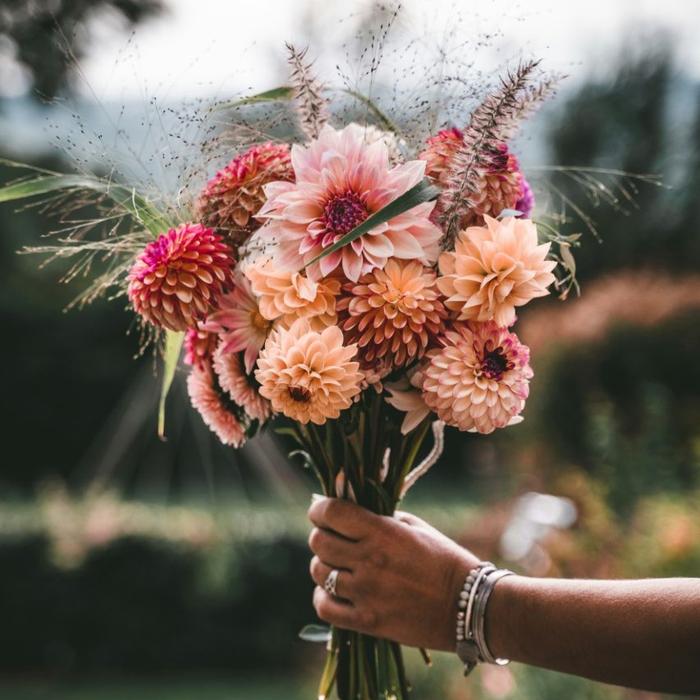
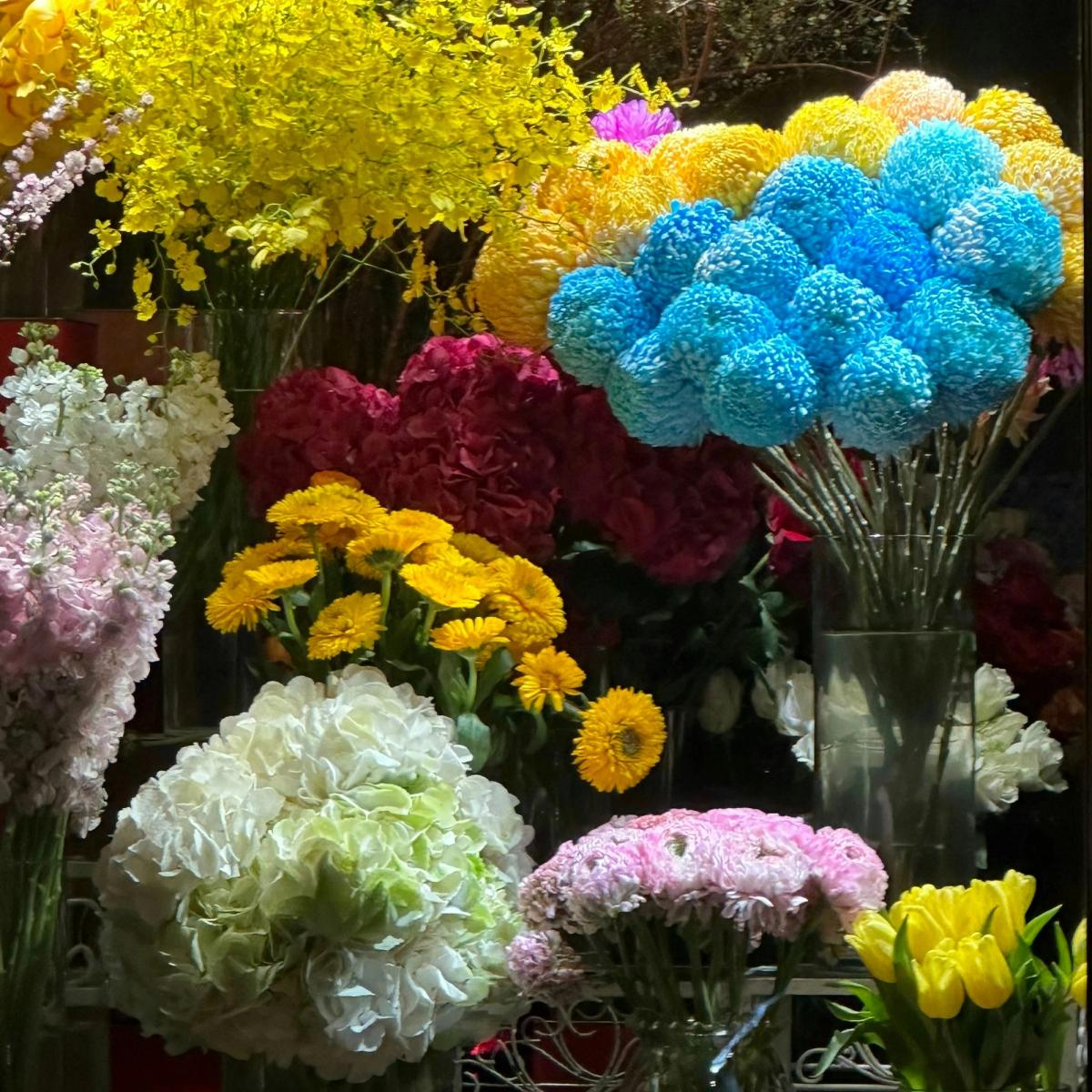
A tight bunch of ivory roses feels classic. Let those same roses sit at different heights among sweet peas and they take on a softer, garden-like look. Pair a few with glossy anthuriums and leave space around them, and the effect is much more sculptural. The flowers can be similar across wedding bouquet styles. The way they’re arranged makes a big difference.
Start with the look you’re drawn to, then choose an outline and size that work with your outfit and feel comfortable to carry. The five bridal bouquet styles below give you words for what you like in a photo and ideas for how to ask a florist for it.
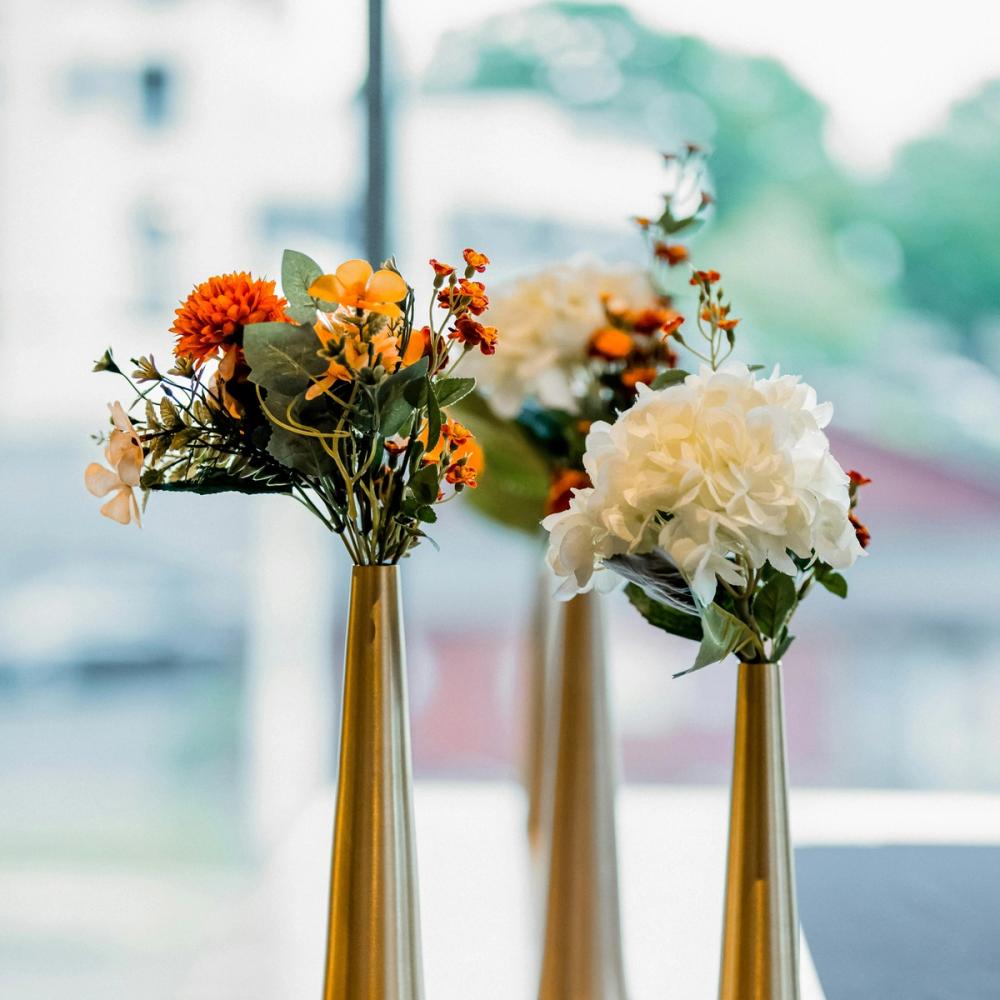
Five wedding bouquet styles and how to recognise them
1. Classic
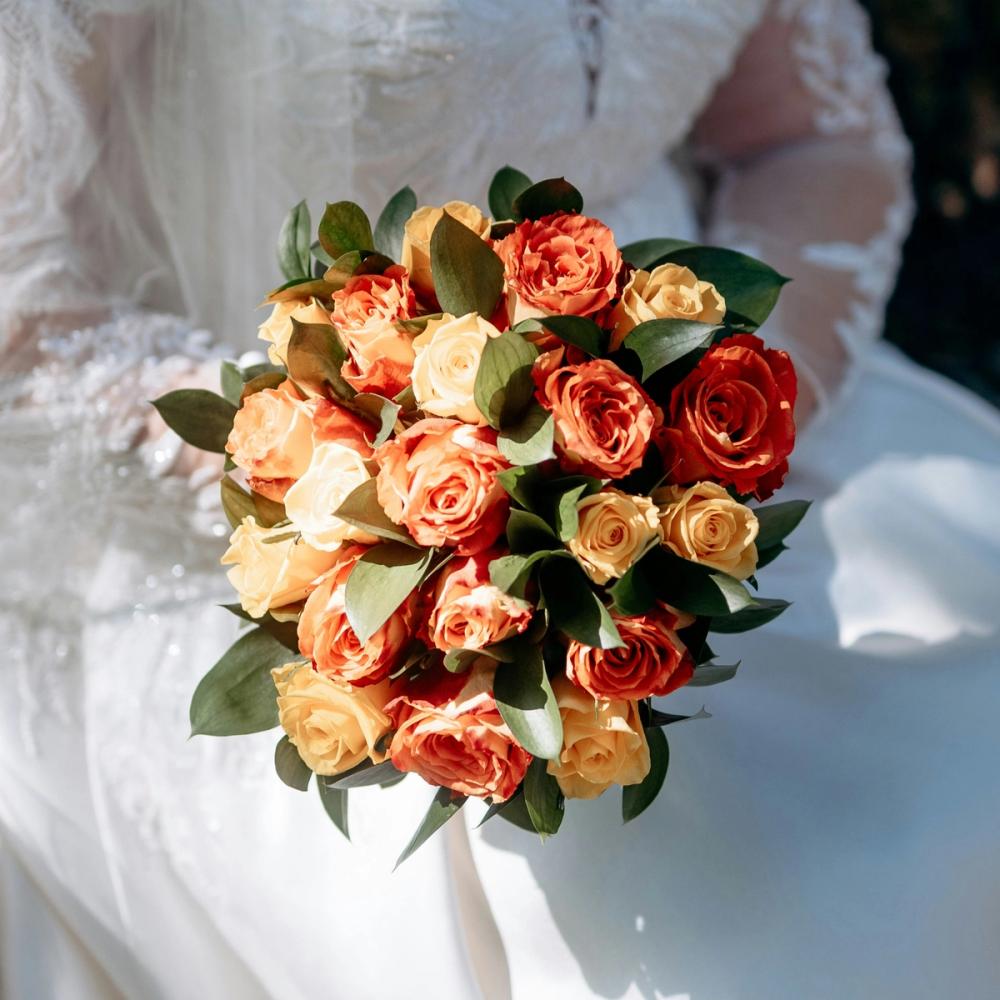
Look for an even outline, repeated blooms and a regular rhythm across the bouquet. A low dome of ivory roses with a neat ribbon wrap is a familiar example. For colour, try warm cream with soft apricot roses. Repeating the colours throughout the bouquet keeps the arrangement looking balanced.
A round bouquet is a natural starting point. Ask for a small posy if you want the flowers to sit neatly below the bodice, or a fuller dome if you want them to make more of a statement. A symmetrical teardrop also suits this style, especially when the flowers taper gradually from larger blooms to smaller ones.
2. Romantic garden
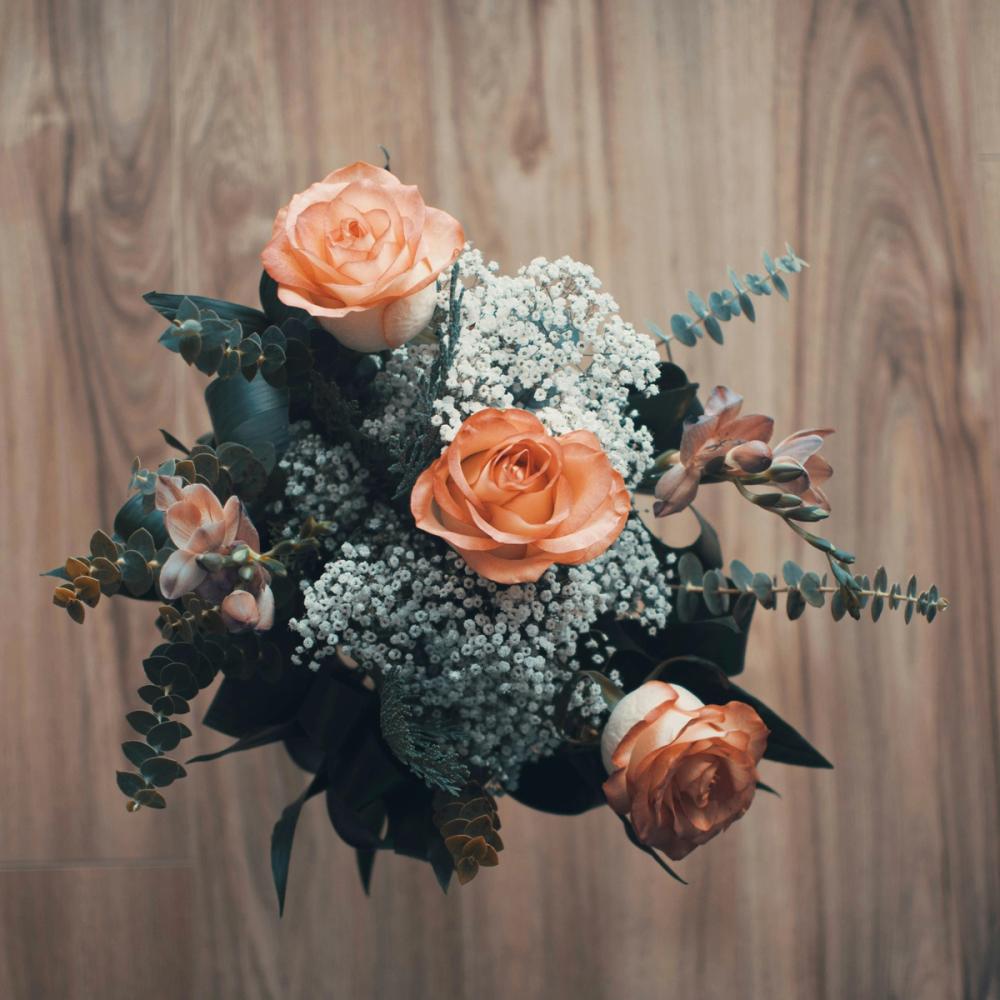
Here the eye goes first to soft, layered petals. Large blooms sit at different depths, with smaller flowers and buds tucked between them. Think open garden roses, ruffled sweet peas and a few stems curving out at the edge. Blush and cream give a soft effect, while plum and dusky pink can make the same arrangement feel richer.
Ask for a loose oval or a gently asymmetrical outline, with a few generous blooms visible from the front. If you like both garden and wildflower bouquets, look at what draws your eye first. A garden bouquet often leads with broad, ruffled flowers. A meadow-style bouquet draws more attention to fine stems and small flower heads.
3. Modern minimalist
Choose one distinctive flower or a very small group of varieties and let the stem lines do some of the work. A few white calla lilies with their stems showing make a strong outline. A small bunch of deep burgundy tulips can feel equally pared back. Think about whether you want the heads all at a similar height or staggered so that each one is easy to see.
A slim bundle, a compact single-variety posy or a long-stemmed arm-sheaf can all work. Ask your florist to include the handle and ribbon in your discussion. With so little else going on, the amount of exposed stem and the finish of the binding are easy to see.
4. Wildflower or bohemian
A wildflower-style bouquet takes its cue from a meadow, with finer stems, small flower heads and little gaps throughout. Imagine cream daisies, pink cosmos and a few grasses catching the light. If you prefer a more bohemian look, bring in warmer colours and stronger textures, such as rust-toned flowers, seed heads and a loose ribbon. Both can have a gathered feel.
Ask for an airy, hand-tied bunch with a few stems sitting higher than the rest. If you like the movement but want something easy to hold in one hand, ask for a narrow handle and keep the longest stems to one side. “Wildflower-style” describes the look. A florist can create it with cultivated cut flowers.
5. Sculptural
Look for a strong line or gesture. One cluster of flowers might sit low beside the hand while a curved stem reaches up or strands of amaranthus fall below it. A few glossy anthuriums can create broad planes of colour, while a branch or an arching stem gives the eye a direction to follow.
Sculptural bouquets can be spare or quite full. If the appeal of a reference photo is the upward sweep or off-centre outline, point to that feature when briefing your florist. A wide asymmetrical design or a narrow cascade can both give the bouquet a strong line. Ask to see the intended front and a side view, especially if much of the shape comes from one projecting stem.
Choose a bouquet shape to go with the style
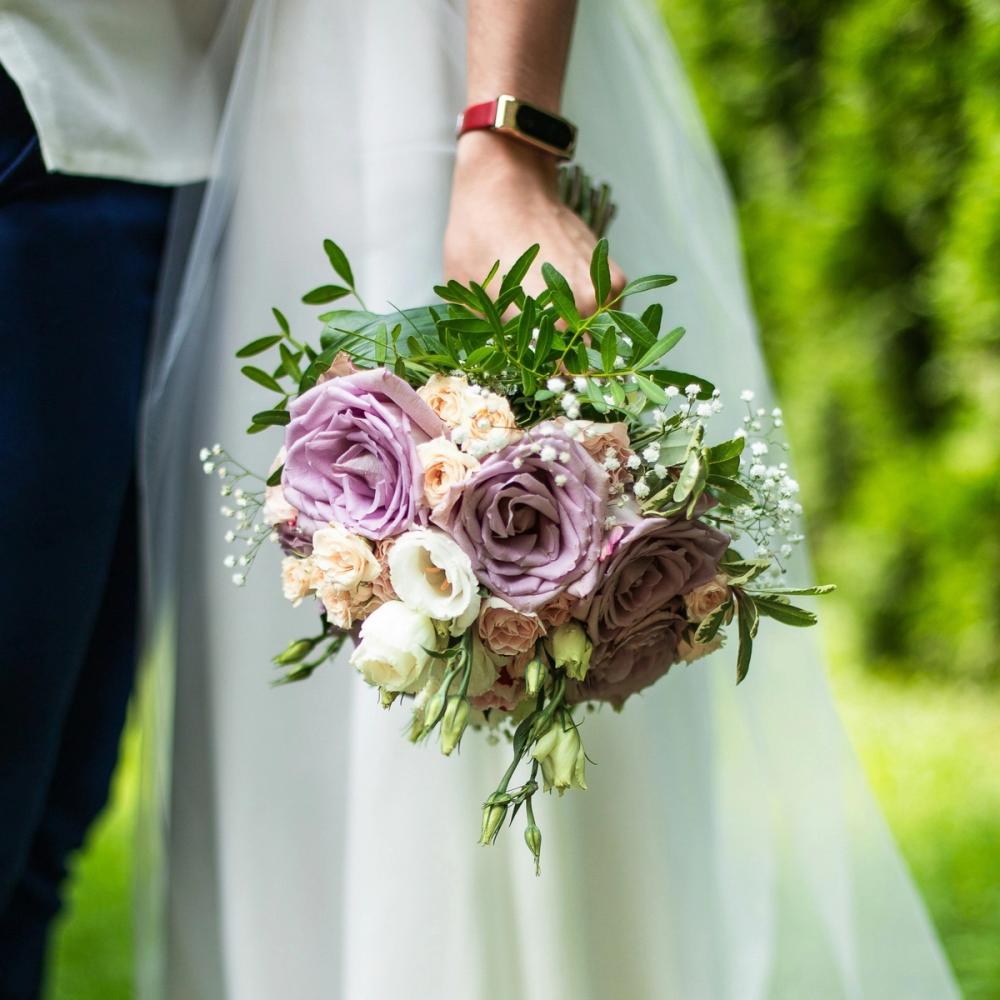
Shape describes the outline the flowers make when you hold them. You can use a favourite shape with several aesthetics. A cascade of evenly spaced ivory blooms can look classic, while a few bold flowers above a single trailing line can feel sculptural.
- Round or posy — A round bouquet has an evenly curved outline and may be a full dome. A posy is typically smaller and more compact. Florists sometimes use the terms interchangeably, so share an example and give an approximate width.
- Loose oval — Flowers spread a little farther sideways than upwards, with an irregular edge. It gives garden-style blooms room to open out without needing a long trail. Hand-tied describes how the stems are gathered and secured, so both a loose oval and a neat posy can be hand-tied.
- Asymmetrical — One side reaches farther out or sits higher than the other. Decide which side you’d like it to extend towards if you want a sleeve or other detail to show in photos.
- Cascade, shower or teardrop — Flowers or foliage hang below the hand. A teardrop usually tapers to a relatively short point, while a longer shower can extend across the skirt. Show your florist where you’d like the trail to end when the bouquet is held at your natural carrying height.
- Arm-sheaf or presentation — Long stems rest along your forearm, with the flower heads generally towards the elbow. This can show off the stems of calla lilies. Practise which arm you’ll use if you’ll be walking in with someone or holding hands during the ceremony.
Check the size and fit against your outfit
Use full-length, held photos to judge the proportions. At a fitting, hold a small bunch of flowers or a roll of paper roughly the width you have in mind. Ask someone to take a photo from the front and side. You’ll see where a low trail would fall and whether a wide bouquet would cover embroidery, a belt or buttons you want to show.
Ask about the handle thickness, weight and balance as well as the overall width. A few airy stems can give a bouquet a wide outline and still feel quite different in the hand from a densely packed arrangement. Tell your florist if you want to hold it in one hand for most of the day or switch hands easily.
Turn your inspiration photos into a florist brief
Take two or three photos and point out what you like in each. One might show the scale, another the colours and another the way the stems move. If you’re drawn to two different aesthetics, combine the qualities you care about. You could ask for the rounded outline of a classic bouquet with the open, ruffled flowers of a romantic garden one.
Give your florist the wedding date and mention whether British-grown flowers are a priority. British-grown peonies are typically available for a short period in May and June, with local timing affected by the weather. If it’s their ruffled petals you love, explain that so your florist can suggest flowers with a similar texture for your date.
A brief could read like this.
We’d like a romantic garden bouquet in ivory and soft yellow, with one or two stems reaching out to the left. I’d like to hold it in one hand and keep the belt on my dress visible. The loose outline and ruffled petals matter most. We’re flexible about the flowers depending on what’s looking good for our date.
FAQ
Do bridesmaid bouquets have to match the bridal bouquet?
They can share a colour or a flower and still have a different shape. For example, if the main bouquet is a wide, loose arrangement in ivory and lilac, the bridesmaids could carry small lilac posies. That gives the flowers a connection across the group photos while keeping each bouquet easy to carry.
Can I use my bouquet as a reception decoration?
Yes. Ask your florist to set aside a stable vase for it on the top table or guest book table. Tell them where it will go so they can check whether the vase will support the bouquet and let any trailing flowers hang freely over the edge.
Should I tell my florist if I want to preserve my bouquet?
Yes, especially if you already know how you’d like it preserved. Ask your preservation provider which flowers suit the method you’ve chosen, such as pressing or drying, and how soon they need the bouquet. Share that advice with your florist before you settle on the stems.